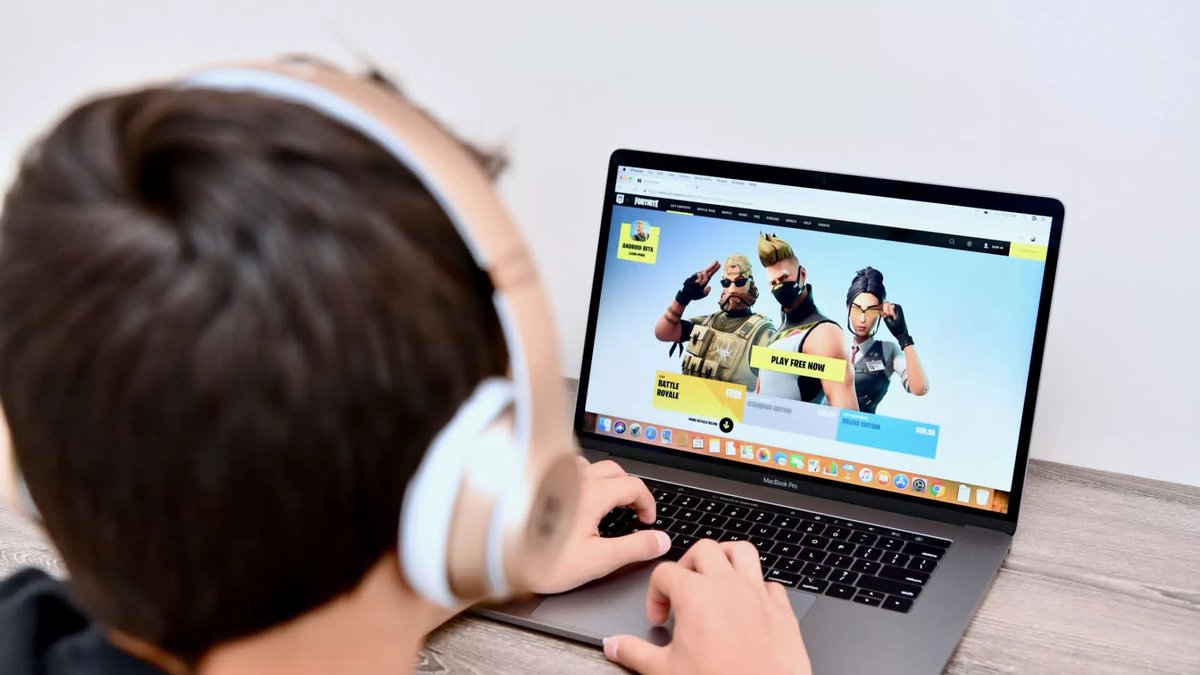
What to Do If Youve Been Targeted by a Fortnite Scam to
The heart sinks, doesn't it? That chilling realization that you've just fallen victim to a scam, especially one involving something as beloved as Fortnite. Maybe it was a tantalizing offer of "free V-Bucks," a fake tournament promising glory, or a message from someone pretending to be an Epic Games admin. The specifics might vary, but the feeling of being outsmarted, violated, or just plain foolish is universal. Let me be clear: this isn't about your intelligence. Scammers today are sophisticated, well-funded, and relentless, deploying tactics from advanced AI to deepfake content. Being targeted by a Fortnite scam isn't a personal failing; it's a testament to their cunning.
But here’s the good news: you're not powerless. Your next moves are critical to protecting your accounts, your identity, and your peace of mind. This guide will walk you through exactly What to Do If You've Been Targeted by a Fortnite Scam, helping you secure your digital life and bounce back stronger.
At a Glance: Your Immediate Steps
Feeling overwhelmed? Start here. These are the absolute first things you should do if you suspect you've been scammed:
- Don't Panic, But Act Fast: Every minute counts, especially if money or sensitive info was shared.
- Secure Your Fortnite Account: Change your Epic Games password immediately and enable 2FA.
- Check Financial Accounts: Contact your bank, credit card company, or payment service if money was involved.
- Scan Your Device: Run an antivirus scan if you clicked suspicious links or downloaded anything.
- Report It: Inform Epic Games and relevant authorities to help prevent future scams.
- Protect Your Identity: Change passwords on other critical accounts (email, banking).
- Educate & Fortify: Learn from the experience and strengthen your future defenses.
The Unsettling Reality: Why Fortnite Scams Are So Common
Fortnite isn't just a game; it's a cultural phenomenon with a massive global player base and a thriving in-game economy powered by V-Bucks, skins, and exclusive items. This popularity, combined with the often-younger demographic of its players, creates a fertile ground for scammers. They understand the desire for rare items, the thrill of competition, and the lure of a good deal.
Modern scammers are not just opportunistic individuals. They often operate in organized networks, using advanced tools like data stolen from breaches, incredibly realistic fake websites, sponsored ads designed to trap you, and even generative AI to craft polished, convincing emails, videos, and deepfake content. They meticulously design their traps to bypass typical defenses, making them incredibly hard to spot for even the most tech-savvy individuals. It’s a constant arms race, and knowing their playbook is your first line of defense, and your guide to recovery.
Before you dive into recovery, take a deep breath. Recall what happened. What information did you share? What links did you click? What access might they have gained? Having a clear picture, however painful, will guide your next steps.
Recognizing the Enemy: Common Fortnite Scam Tactics & Their Red Flags
Knowledge is power, especially when it comes to dodging digital threats. Understanding the common ploys used by Fortnite scammers can help you not only identify if you've been targeted but also prevent future incidents.
The Allure of "Free V-Bucks" Scams
Perhaps the most pervasive scam, these tricks promise players easy access to free V-Bucks—Fortnite’s in-game currency. They pop up everywhere: on social media feeds, through tempting ads, in unsolicited in-game messages, or via "clickbait" videos. Victims are typically directed to a third-party website where they're asked to complete surveys, provide personal information, or, most dangerously, enter their Fortnite login credentials.
- How it works: You're told you just need to "verify your account" or "complete one simple step" to get thousands of V-Bucks. This often involves entering your Epic Games username and password.
- The Trap: Once you provide these details, the scammers have access to your account. They might drain your V-Bucks, steal your rare skins, or even lock you out completely. Sometimes, these sites are also used to sell your personal data or inject malware onto your device, disguised as a "Fortnite generator" or "V-Bucks hack."
- Red Flags:
- Too-Good-To-Be-True Offers: Epic Games doesn't give away V-Bucks outside of official promotions, battle pass rewards, or legitimate gift cards. If it sounds too generous, it's fake.
- Fake Websites: Always scrutinize the URL. Scammers often use domains that look similar to Epic Games (e.g.,
epicgamez.com,fortniteweb.net). Look for misspellings or unusual extensions. The official site isepicgames.com. - Suspicious Information Requests: Fortnite will never ask for your login credentials for a promotion. Any site that requires your password after you've already logged into Epic Games (or instead of logging in via Epic Games) is a major red flag.
- If you're ever tempted by these claims, remember that legitimate V-Bucks come through official channels. Don't fall for promises of easy money; Access the V-Bucks generator from unknown sources, for example, is almost certainly a pathway to a scam.
The Deceptive Hook of Phishing Scams
Phishing scams are designed to trick you into revealing your login information, allowing scammers to hijack your account. These often come in the form of fake emails, direct messages on social media, or login pages that mimic the official Fortnite or Epic Games sites.
- How it works: You might receive an email claiming there's an issue with your account, a special reward waiting, or a limited-time offer. Clicking the link takes you to a fake login page that looks identical to Epic Games. You enter your credentials, and the scammers steal them.
- The Trap: With your login details, they can seize control of your account, steal your V-Bucks and skins, or even sell your account to other players.
- Red Flags:
- Suspicious Sender Addresses: Check the sender's email domain. Official emails from Epic Games will come from an
@epicgames.comaddress, not@gmail.com,@outlook.com, or variations like@epicgamessupport.net. - Urgent or Threatening Messages: Scammers often use fear or urgency ("Your account will be suspended if you don't act now!") to rush you into clicking without thinking. Always verify the legitimacy of such claims directly on the official Epic Games website.
- Incorrect URLs: Before clicking any link, hover over it (on desktop) or long-press (on mobile) to see the actual URL. If it doesn't lead to
https://www.epicgames.com(note thehttps://for security), don't click. - Poor Grammar/Spelling: While scammers are getting better, grammatical errors or awkward phrasing can still be a giveaway.
The Lure of Fake Tournament Scams
For competitive players, the idea of winning big in a Fortnite tournament is highly appealing. Scammers exploit this ambition by promoting fake tournaments with extravagant cash prizes, rare items, or exclusive skins. These "events" are often advertised on social media or shady gaming websites.
- How it works: You're invited to register for a tournament, which might require a "small registration fee" or ask for extensive personal information for "verification." They might even instruct you to download "special tournament software" or "anti-cheat tools."
- The Trap: After you pay or provide your data, the organizers vanish. The "software" you downloaded could be malware designed to steal information or damage your device.
- Red Flags:
- Unverified Tournaments: Always check if a tournament is listed on official Fortnite channels (the Epic Games website, official esports news sites) or trusted esports platforms. If it's only advertised on a random social media page, be very wary.
- Registration Fees: While some high-stakes professional tournaments have entry fees, most official Fortnite community events are free. Be suspicious if a significant fee is required, especially for an unknown organizer.
- Extravagant Rewards: Promises of massive cash prizes or incredibly rare items that seem disproportionate to the event's visibility or perceived legitimacy are major red flags.
Impersonation Scams: When Trust is Betrayed
Scammers often pose as trusted entities to gain your confidence and then exploit it. This can involve pretending to be Epic Games employees, official support staff, or even famous players and influencers.
- How it works: An "Epic Games staff member" might contact you directly via email or social media, offering to fix an account issue, provide "lost" V-Bucks, or recover stolen items. They'll then ask for your login details or payment. Similarly, fake giveaways on platforms like YouTube, Instagram, or Twitter often feature "influencers" who are actually imposters.
- The Trap: Once they have your credentials or money, they disappear, leaving you with nothing.
- Red Flags:
- Unsolicited Contact: Epic Games will rarely, if ever, directly DM you on social media or email you out of the blue to offer services or resolve issues. You typically initiate contact with support.
- Payment Requests for Support: Official Fortnite support is free. If anyone claiming to be Epic Games support asks for money to help you, it's a scam.
- Unverified Influencers: Always look for official verification badges on social media. Even then, be skeptical of giveaways that ask for your personal information beyond what's strictly necessary to send a prize (and never your Fortnite password!).
Immediate Action Plan: Your First 72 Hours After a Fortnite Scam
The moments immediately following a scam can feel chaotic, but taking swift, decisive action is your best bet for damage control and recovery. Think of this as your emergency response guide.
Step 1: Don't Panic, But Act Fast
Discovering you've been scammed is an emotional hit. You might feel angry, embarrassed, or scared. Take a deep breath. Acknowledge these feelings, but don't let them paralyze you. Time is of the essence. The sooner you act, the greater your chances of reversing fraudulent transactions, recovering accounts, and mitigating further damage. Even if you're not 100% sure it was a scam, it's better to be cautious and take protective measures. Strengthening your security is always a win.
Step 2: Can You Get Your V-Bucks (or Money) Back? Reversing Fraudulent Transactions
If the scam involved you sending money, purchasing gift cards, or making any financial transaction, this is your absolute top priority.
- Contact Your Bank or Credit Card Company IMMEDIATELY: If you used a debit card, credit card, or bank transfer, call your financial institution as soon as humanly possible. Explain the situation clearly: you've been a victim of fraud. They may be able to:
- Stop Pending Transactions: If the money hasn't cleared yet.
- Reverse Transactions: For credit cards, you might be able to initiate a chargeback for fraudulent purchases. Debit cards can be more difficult but are still worth pursuing.
- Close or Freeze Your Account: To prevent further unauthorized use.
- Payment Services (PayPal, Venmo, etc.): If you used a third-party payment service, contact their fraud department right away. They have specific procedures for reporting unauthorized transactions and may be able to help.
- Gift Cards or Wire Transfers: These are often harder to recover.
- Gift Cards: Contact the company that issued the gift card (e.g., Apple, Google Play, Xbox, PlayStation, Amazon). Explain you've been scammed and ask if the funds can be frozen or refunded. The faster you act, the better.
- Wire Transfers: These are notoriously difficult to reverse as they're often treated like cash. Contact the wire transfer company (e.g., Western Union, MoneyGram) immediately, but be prepared that recovery might be unlikely.
Step 3: Secure ALL Your Accounts (Beyond Just Fortnite)
If you entered passwords, account details, or clicked a suspicious login link, assume your credentials for that account are compromised. More critically, if you use the same password (or similar ones) across multiple accounts, all of those accounts are now at risk.
- Change Your Fortnite/Epic Games Password: This is non-negotiable. Choose a strong, unique password you've never used before.
- Change Your Email Password: Your email is often the "key to your kingdom," used for password resets on countless other accounts. Secure this first and foremost with a new, robust password.
- Change Passwords for Banking, Shopping, and Other Critical Accounts: Any account that uses the same password as your compromised Fortnite account or email needs an immediate password change.
- Enable Two-Factor Authentication (2FA) Everywhere: If you haven't already, turn on 2FA for your Epic Games account, email, banking, social media, and any other service that offers it. This adds a crucial layer of security, requiring a code from your phone or another device in addition to your password.
- Pro Tip: Use a password manager to generate and store unique, complex passwords for all your accounts. It's a game-changer for digital security.
Step 4: Scan for Digital Invaders (Malware Check)
If the scam involved clicking a link that led to a download, an unusual website, or any prompt to install "software," your device might be exposed to malware, spyware, or viruses.
- Run a Full System Scan: Use reputable antivirus and anti-malware software (like Malwarebytes, Avast, Bitdefender, Windows Defender) to perform a comprehensive scan of your device.
- Remove Any Threats: Follow the software's instructions to quarantine and remove any detected threats.
- Consider a Clean Install (Extreme Cases): If you're highly concerned or multiple threats are found, a factory reset or clean operating system install might be necessary, though this is a last resort and should be done with caution after backing up important files.
Step 5: Report the Crime: Informing the Authorities & Epic Games
Reporting the scam serves two vital purposes: it can aid in your recovery, and it helps track scam patterns, preventing others from falling victim.
- Report to Epic Games:
- Go to the official Epic Games support website.
- Look for sections related to "Account Security," "Reporting Fraud," or "Contact Us."
- Provide as much detail as possible: what happened, when it happened, names/usernames involved, URLs of fake sites, screenshots of messages, and any financial transaction details.
- Report to Local/National Authorities:
- In the US:
- Federal Trade Commission (FTC): Report the scam at
reportfraud.ftc.gov. The FTC collects these reports and shares them with law enforcement. - Internet Crime Complaint Center (IC3): For scams involving the internet, file a complaint with the FBI's IC3 at
ic3.gov. - Your State Attorney General: They often have consumer protection divisions.
- Outside the US: Look for your country's equivalent of an internet crime unit, fraud reporting agency, or consumer protection body (e.g., Action Fraud in the UK, Cybercrime Report in Canada).
- Report on Social Media Platforms: If the scam originated on a social media platform (Facebook, Instagram, Discord, YouTube, Twitter), report the offending account or post to the platform's administrators. This can lead to the account being taken down, protecting others.
Proactive Defense: Bulletproofing Your Fortnite Account for the Future
Getting scammed is a harsh lesson, but it's also an opportunity to significantly upgrade your digital security. These best practices aren't just for Fortnite; they're essential for your entire online life.
Enable Two-Factor Authentication (2FA) – Your Digital Bouncer
This cannot be stressed enough. 2FA (or multi-factor authentication, MFA) adds an extra layer of security beyond just your password. Even if a scammer gets your password, they can't log in without the second factor – usually a code sent to your phone or generated by an authenticator app.
- How to do it for Epic Games:
- Go to
epicgames.comand log into your account. - Navigate to your Account Settings (usually found by clicking your username in the top right).
- Go to the "Password & Security" tab.
- Scroll down to the "Two-Factor Authentication" section and enable your preferred method (authenticator app, email, or SMS). Follow the prompts to set it up.
- Why it's crucial: 2FA makes it exponentially harder for scammers to access your account, even if they manage to steal your password through phishing or other means. It’s like having a second, much stronger lock on your digital front door.
Use Strong, Unique Passwords – The Foundation of Security
Reusing passwords is like giving a thief a master key to all your houses. If one account is compromised, all others using the same password become vulnerable.
- Create Complex Passwords: Aim for passwords that are at least 12-16 characters long, combining uppercase and lowercase letters, numbers, and symbols. Avoid using personal information (birthdays, pet names) that can be easily guessed.
- Use a Password Manager: This is the easiest way to manage strong, unique passwords for every single online account. Tools like LastPass, 1Password, Bitwarden, or Dashlane can generate complex passwords and securely store them, so you only need to remember one master password.
- Change Passwords Regularly: While unique passwords are more important than frequent changes, it’s still a good habit to update your most critical passwords every few months.
Skepticism as Your Shield: Free V-Bucks & Too-Good-To-Be-True Offers
This is a mindset shift more than a technical step. Adopt a healthy dose of skepticism for anything that promises something for nothing.
- If it sounds too good to be true, it almost certainly is. Epic Games has specific, official ways of distributing V-Bucks, skins, and items. These do not involve third-party "generators" or random social media giveaways from unverified sources.
- Verify Everything: Before clicking a link or providing information, always verify the source. Check official websites, social media accounts with blue checkmarks, and well-known gaming news sites. Don't rely on unverified DMs or emails.
- Understand How Promotions Work: Official promotions or collaborations will always be widely advertised on official Epic Games channels, not through obscure links or private messages.
Report Suspicious Activity – Your Community Duty
You're not just protecting yourself; you're helping protect the entire Fortnite community.
- Report in-game: If you receive suspicious messages or see players promoting scams in Fortnite, use the in-game reporting tools.
- Report to Epic Games Support: For anything more complex (fake websites, phishing emails), follow the official reporting process through the Epic Games support website. Include screenshots, URLs, and any relevant details.
- Report on Social Media: If you see scam accounts or posts on platforms like Twitter, Instagram, or YouTube, use their built-in reporting features. The more reports an account receives, the faster it will be investigated and potentially removed.
The Power of Education: Protecting Younger Players
Many Fortnite players are children or teenagers, who may not have the same level of digital literacy or skepticism as adults. Parents and guardians have a crucial role to play here.
- Open Communication: Talk openly with younger players about online risks. Explain what scams look like and why they happen. Emphasize that free V-Bucks offers are almost always fake.
- Teach Red Flags: Show them how to spot fake URLs, suspicious email addresses, and the dangers of clicking unknown links.
- Establish Rules: Set clear rules about not sharing personal information, not clicking on suspicious links, and always asking for permission before making purchases or downloading anything.
- Joint Account Management: For very young players, consider managing the Epic Games account together, including setting up 2FA and monitoring activity.
- Emphasize "No Shame": Create an environment where children feel comfortable coming to you immediately if they think they've made a mistake or encountered something suspicious, without fear of punishment. This quick disclosure can be the difference between minor inconvenience and major loss.
Beyond the Game: Identity Theft Concerns & What to Watch For
While a Fortnite scam might seem confined to your gaming life, if you shared personal details like your full name, address, phone number, or even financial information, the implications could stretch much further, potentially leading to identity theft.
- Monitor Your Financial Accounts: Keep a close eye on all your bank and credit card statements for any unusual activity, even small, seemingly insignificant transactions. Scammers sometimes test small charges first.
- Check Your Credit Report: Obtain free copies of your credit report from major credit bureaus (in the US, AnnualCreditReport.com provides one free report from each bureau annually). Look for any accounts opened in your name that you don't recognize.
- Consider a Credit Freeze: If you're seriously concerned about identity theft, you can place a "credit freeze" with the major credit bureaus. This prevents new credit accounts from being opened in your name, although it also means you'll need to temporarily unfreeze it if you apply for new credit.
- Be Vigilant for Other Scam Types: Once scammers have some of your information, they might use it for other types of scams, like impersonating you to access other accounts or launching targeted phishing attacks. Be extra cautious about unexpected calls, emails, or messages.
Moving Forward: Lessons Learned and Regaining Trust
Being targeted by a scam is a jarring experience, but it doesn't have to be a permanent setback. Your ability to recover and fortify your defenses is a testament to your resilience.
- Forgive Yourself: Scammers are professionals. It’s not your fault. What matters is how you react and what you learn.
- Review Your Security Routines: Use this as a catalyst to review all your online security habits, not just for Fortnite, but for banking, email, social media, and more.
- Stay Informed: The landscape of online scams is constantly evolving. Stay updated on common tactics and new threats. Many reputable cybersecurity blogs and consumer protection websites offer free resources.
- Rebuild Confidence: The more you educate yourself and implement strong security practices, the more confident you'll feel navigating the digital world, knowing you've done everything possible to protect yourself.
The online world, including the vibrant universe of Fortnite, offers incredible experiences. By understanding the risks, knowing what to do when things go wrong, and committing to strong security, you can continue to enjoy it safely and confidently. Don't let a scam extinguish your fun; let it ignite your vigilance.